
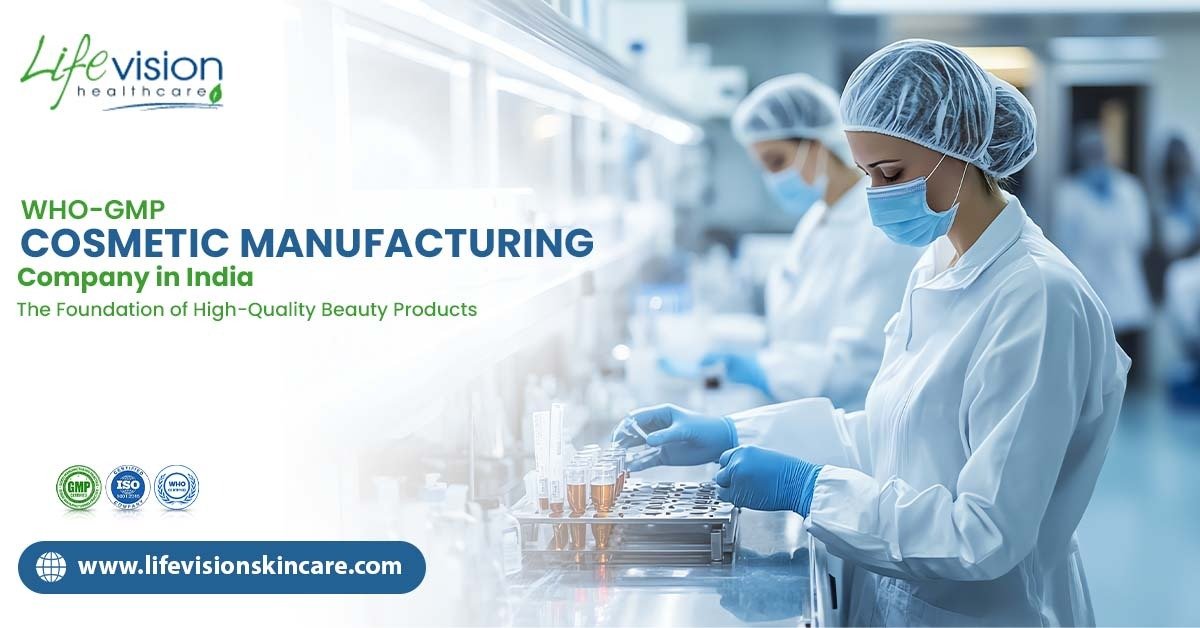
In India, the cosmetics sector is growing fast, mostly because consumers are now looking for better skincare, haircare, herbal cosmetics, and general personal care products. At the same time, more beauty brands are popping up, so the demand for dependable manufacturing partners feels… way more urgent than before. Picking a WHO-GMP cosmetic manufacturing company in India becomes one of those decisions that really can make or break a brand’s reputation.
A WHO-GMP-certified manufacturer, on the other hand, sticks to internationally recognized good manufacturing practices (GMP), and this means the cosmetics are made in clean, hygienic locations, using consistent, standardized steps. There are also strict quality checks, plus detailed documentation. In simple terms, these methods support businesses in providing safe, effective beauty formulations, while still matching customer expectations and the rules that regulators typically ask for. So, learning about WHO-GMP certification can guide you to make smarter choices when you’re launching a private-label cosmetics brand, expanding your product range, or searching for a contract manufacturer.
What is a WHO-GMP Cosmetic Manufacturing Company
A WHO-GMP cosmetic manufacturing company in India is basically a manufacturer that follows Good Manufacturing Practices (GMP). It’s especially relevant for keeping product quality stable, safe, hygienic, and consistent in daily operations, so the whole process feels more controlled than random. In other words, these manufacturers use standardized steps across the production line, not just at one stage, like
- Raw material inspection
- Formula development, (sometimes called compounding planning)
- Manufacturing
- Quality testing
- Filling and packaging
- Product storage
- Distribution
So, all of this points to the same target for manufacturing companies: to make sure every batch of cosmetics meets a similar high bar for quality, and also for how well the product performs.
Why is WHO-GMP Certification Important for Cosmetic Manufacturing ?
Today consumers are pretty aware about product quality and safety. If cosmetics are low-quality, it can harm people’s skin health, damage a brand reputation, cause customer complaints, and create regulatory hassles. As a result, a WHO-GMP-certified cosmetic manufacturer helps to minimize these risks by maintaining the following:
- Hygienic production facilities
- Standardized manufacturing processes
- Batch-to-batch consistency
- Quality assurance systems
- Proper documentation
- Trained technical staff
- Controlled production environments
As a result, these factors contribute to safer products and greater customer confidence.
Why it Can be Smart to Invest in WHO-GMP Certified Cosmetic Manufacturers in India ?
Working with a WHO-GMP Cosmetic Manufacturing Company in India gives a few practical business edges, but also really important. It’s not only about labels; it’s more about how the work gets done, every time. Let’s make sense of this idea by looking at a couple of examples
1. Steady Product Quality
By using consistent production habits, everything stays lined up, so each batch gives you the same level of quality, texture, smell, color, and outcomes
2. Better Product Safety
With firm hygiene measures, and ongoing quality checks, the risk of contamination goes down, and it also limits manufacturing errors that can sneak in sometimes.
3. Regulatory Compliance
Who-GMP manufacturers use well-defined quality frameworks, making it easier to meet applicable manufacturing norms and the relevant compliance expectations.
4. Better Brand Reputation
People tend to trust brands more when the cosmetics are made inside certified facilities; it also sounds simple, but it really influences buying decisions.
5. Faster Business Growth
When your WHO-GMP Certified Cosmetic Manufacturers in India are reliable, you can spend more energy on branding, marketing, and customer-reaching efforts. However, such growth is possible only if you are not frequently facing production problems.
So in short, who gmp certification isn’t just a label; it helps the business run smoother and look more credible to customers.
How to Compare a WHO-GMP Cosmetic Manufacturing Company in India with Others?
Choosing the right WHO-GMP Certified Cosmetic Manufacturing Company matters a lot for keeping product quality steady, meeting regulatory requirements, controlling pricing, and protecting brand reputation. Most brands shouldn’t pick a manufacturer just because they quote low manufacturing costs or they list a huge product catalog. In addition, a more sensible method is to compare companies through their certifications, manufacturing abilities, quality-control routines, formulation support, and so on. Thus, here we have some important key things to compare step by step
1. Confirm GMP and Other Certifications
In the beginning you can start by seeing if the company really runs gmp compliance, not only “talks” about it. Don’t trust logos on a website. Afterwards, request their latest certificates and check the scope, the exact manufacturing plant, and the expiry date.
2. Verify Manufacturing License and Regulatory Compliance
A dependable WHO-GMP-certified cosmetic manufacturer should hold the correct cosmetic manufacturing license, plus the related regulatory papers. CDSCO says cosmetic manufacturing licenses in India are issued by the respective state licensing authorities, rather than being issued straight by CDSCO. If they are unable to identify the authority that issued the license, it raises a significant concern.
3. Compare Product Manufacturing Capabilities
Not every manufacturer is equipped to produce every type of cosmetic or to be versatile in that regard. So take a moment and compare the company’s actual capabilities with the cosmetic product range you’re planning to sell.
4. Now Look at Quality Control and Testing Facilities
Quality control directly impacts the steadiness and safety of your products. For this solution, try to ask very specific questions about how they test raw materials, packaging materials, and finished products.
Questions to Ask Before Choosing a WHO-GMP Certified Cosmetic Manufacturing Company
Before you go ahead and finalize a manufacturing partnership, ask these things, like a little check list you keep in your head but not always written down.
- Is your manufacturing facility WHO-GMP certified in practice, not just on paper?
- What exact quality assurance processes do you follow, and how often do you review them?
- Can you make custom cosmetic formulations for us, not just tweak what already exists?
- Do you also do private-label manufacturing, where we bring the brand and you actually handle the making side, start to finish?
- What’s your minimum order quantity, so we can pick a reasonable starting point and plan from there?
- What packaging options do you provide, meaning sizes, materials, and labeling capabilities?
- Can you support large-scale production without quality getting, sort of, shaky?
- What quality documentation will you provide, like a COA, batch records, or similar reports?
- What’s your average production and delivery timeline, and how do you handle delays?
In short, these questions should help you judge whether the manufacturer can actually meet your business needs and keep things steady.
Why WHO-GMP Manufacturing is the Foundation of High-Quality Beauty Products
Every successful cosmetic brand depends on consistent manufacturing quality. Even the most creative formulations need standardized production steps, so safety, effectiveness, and customer satisfaction stay in place.
- WHO-GMP-certified manufacturers build solid quality systems that make sure:
- Formulations stay consistent.
- Safe manufacturing practices are actually followed.
- Ingredients get handled accurately and in the right order, mostly.
- Hygienic production environments stay maintained—at all times.
Packaging standards are reliable too. - Process improvement never stops, even when things seem fine.
Hence, all of this turns into products that people trust, and brands can market with a bit more confidence.
Frequently Asked Questions (faqs)
Q1: What is a WHO-GMP cosmetic manufacturing company?
A: A well-established WHO-GMP cosmetic manufacturing company in India follows Good Manufacturing Practices (GMP) to ensure cosmetic products are manufactured according to standardized quality, hygiene, and safety guidelines.
Q2: Why should I choose a WHO-GMP-certified cosmetic manufacturer?
A: A WHO-GMP-certified manufacturer helps maintain consistent product quality, supports regulatory compliance, ensures hygienic production, provides proper documentation, and builds stronger customer trust.
Q3: Can WHO-GMP manufacturers produce private-label cosmetic products?
A: Yes. Many WHO-GMP-certified manufacturers offer private-label, third-party, and contract manufacturing services. They can also provide custom formulations, branding support, packaging solutions, and related services.
Q4: What should I compare before selecting a cosmetic manufacturing company?
A: You should compare certifications, manufacturing infrastructure, product range, R&D capabilities, quality control systems, packaging options, production capacity, documentation, pricing, and customer support before making a decision.
Q5: How does WHO-GMP certification benefit cosmetic brands?
A: WHO-GMP certification helps brands maintain high-quality and safer products while reducing manufacturing risks. It also improves customer confidence and strengthens long-term brand credibility in the market.
Conclusion
Picking a WHO-GMP cosmetic manufacturing company in India is a strategic investment that hits the quality, safety, and overall success of your cosmetic brand. A manufacturer that has certified facilities, solid infrastructure, dependable quality control, smart r&d, and production that can scale gives you the base you need for a beauty business people actually trust and want to buy from.
Before you decide, double-check manufacturers by looking at certifications, manufacturing standards, the product range they cover, transparency, packaging capabilities, and the long-term support they offer. When you team up with the right WHO-GMP cosmetic manufacturer such as LifeVision Skincare, you will launch a set of premium beauty products. Along with these products you will also set your brand up for sustainable growth as the cosmetics market keeps evolving.